
Private Label Clothing Manufacturing: A Practical Guide for Fashion Brands
Private label clothing manufacturing allows fashion brands, retailers, and importers to sell garments under their own brand without owning a factory.
The buyer controls the product design, fabric, colors, sizing, labels, packaging, and quality requirements. The clothing manufacturer handles material sourcing, sample development, cutting, sewing, finishing, quality inspection, and bulk production.
This production model is suitable for both new clothing brands and established companies that want to expand their product range.
What Is Private Label Clothing Manufacturing?
Private label clothing is produced by a third-party manufacturer but sold under the buyer’s brand name.
Depending on the project, a manufacturer may:
- Produce garments from a complete tech pack
- Copy and improve a reference sample
- Modify an existing style
- Help develop a new product
- Add custom labels, hangtags, logos, and packaging
Private label manufacturing is different from simply adding a logo to a ready-made garment. Brands can usually customize the fit, fabric, color, construction, printing, embroidery, trims, labels, and packaging.
Private Label vs. White Label
Private label and white label are often confused.
White label clothing is usually a standard product that is available to multiple buyers. The buyer mainly adds a logo or label.
Private label clothing is developed specifically for one brand. It normally offers more control over fabric, sizing, colors, workmanship, and design details.
Private label manufacturing is better for brands that want differentiated products and stronger brand identity. White label production may be more suitable for testing a market quickly with a smaller investment.
How Does Private Label Clothing Manufacturing Work?
Most clothing projects follow several important stages.
1. Product Planning
Before contacting a manufacturer, define:
- Product category
- Target customer
- Estimated quantity
- Target price
- Size range
- Required delivery date
- Destination market
A premium hoodie, a promotional T-shirt, and a technical sportswear item require very different fabrics, workmanship, and quality standards.
Clear product positioning helps the manufacturer recommend suitable materials and production methods.
2. Tech Pack or Reference Sample
A tech pack is the main instruction document for garment development. It usually includes:
- Front and back drawings
- Measurements
- Fabric composition and weight
- Color references
- Stitching details
- Logo artwork
- Label requirements
- Packaging instructions
A physical reference sample can also help communicate fit, fabric feel, construction, and finishing.
Brands without a complete tech pack may still work with an experienced clothing manufacturer, but more development and communication may be required.
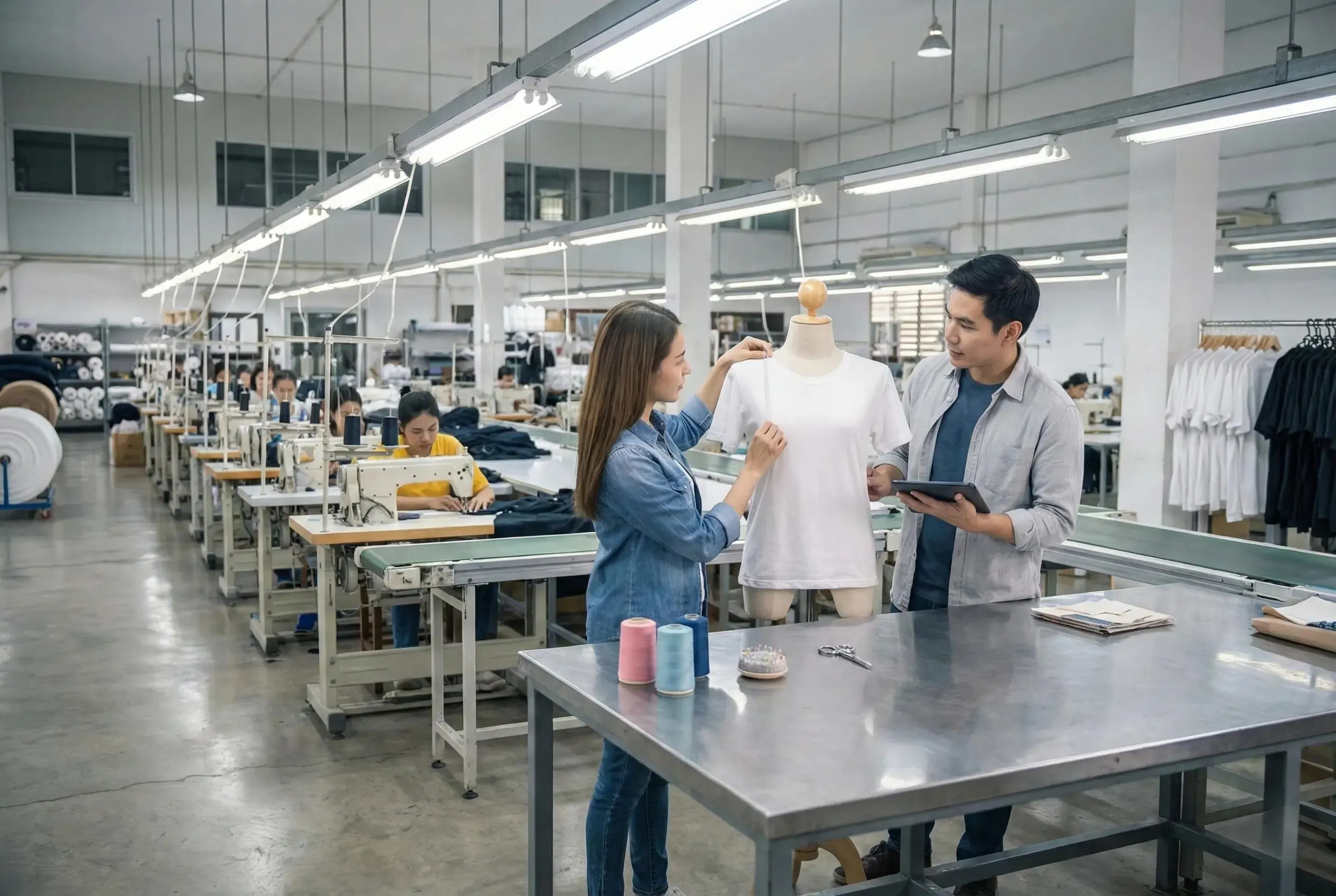
Private label clothing sample and tech pack development
3. Fabric and Trim Selection
Fabric affects the appearance, comfort, performance, and price of a garment.
Important fabric details include:
- Fiber composition
- Fabric weight
- Stretch
- Texture
- Shrinkage
- Colorfastness
- Pilling resistance
- Hand feel
Trims may include zippers, buttons, elastic, drawcords, rib, lining, padding, labels, and packaging materials.
Using available stock fabric may reduce the MOQ and development time. Custom-dyed or specially developed fabric usually requires a larger order quantity.
4. Sampling
The manufacturer creates a sample for the buyer to check:
- Fit
- Measurements
- Fabric
- Color
- Construction
- Printing or embroidery
- Labels and trims
The first sample may require revisions. Feedback should be specific and measurable.
Instead of saying “the garment is too large,” it is better to say “reduce the chest measurement by 2 cm.”
Bulk production should begin only after the sample, size chart, colors, materials, logos, labels, and packaging have been approved.
5. Bulk Production
After approval, the manufacturer prepares materials and begins production.
The main steps normally include:
- Fabric inspection
- Pattern grading
- Fabric cutting
- Sewing
- Printing or embroidery
- Washing or finishing
- Quality inspection
- Ironing and packing
The production process depends on the garment type. A basic T-shirt is easier to produce than a padded jacket, tailored coat, washed denim item, or pleated dress.
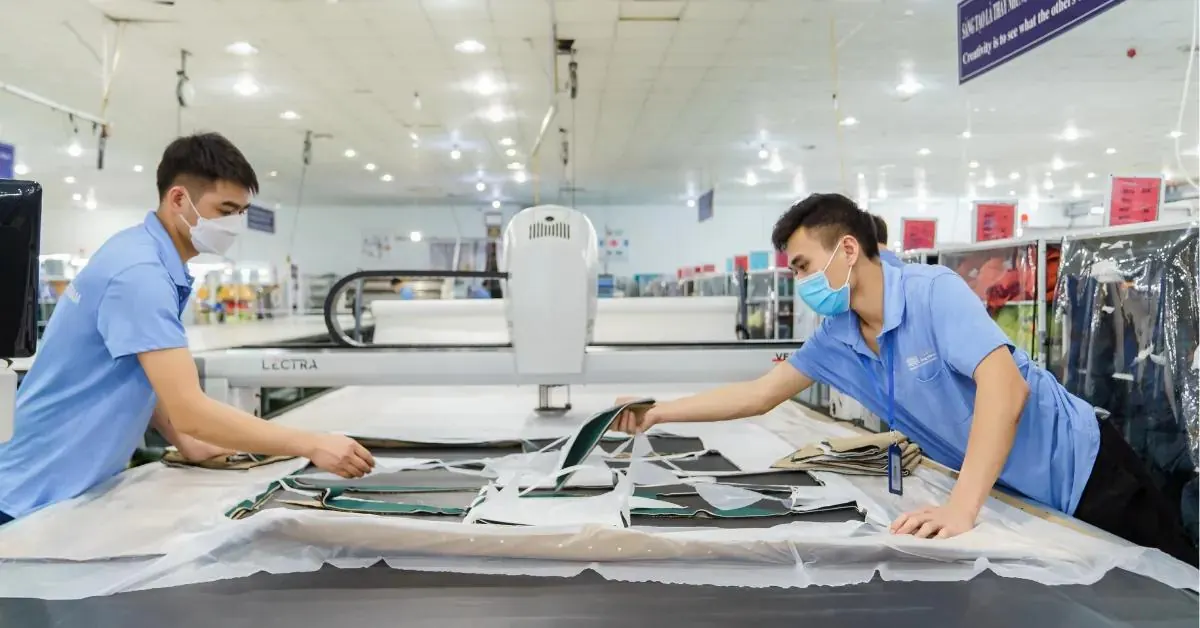
Private label clothing manufacturing process in a garment factory
6. Quality Control
Quality control should not take place only after production is finished.
A reliable manufacturer normally checks quality at several stages:
Material inspection: Fabric color, weight, shrinkage, defects, and trims are checked before cutting.
Inline inspection: Garments are checked during sewing so repeated problems can be corrected early.
Final inspection: Finished garments are checked for measurements, workmanship, appearance, labels, quantities, and packaging.
For larger orders, buyers may arrange an independent third-party inspection before shipment.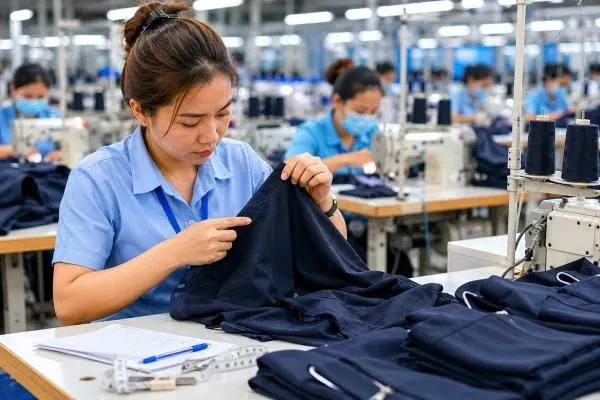
Private label garment quality control inspection
What Can Be Customized?
Private label clothing manufacturers may offer customization for:
- Patterns and garment fit
- Fabric composition and weight
- Pantone colors
- Screen printing
- Digital printing
- Embroidery
- Patches and appliqué
- Buttons and zippers
- Woven labels
- Care labels
- Size labels
- Hangtags
- Barcodes
- Polybags and cartons
- Washing, dyeing, quilting, or pleating
More customization normally means higher development costs, longer lead times, and larger MOQs.
For a first collection, it is often better to focus on a smaller number of styles and colors.
How Much Does Private Label Clothing Cost?
There is no fixed price for private label clothing manufacturing.
The unit price depends on:
- Fabric cost
- Fabric consumption
- Trims and accessories
- Sewing difficulty
- Printing or embroidery
- Order quantity
- Number of colors
- Packaging
- Testing
- Inspection
- Shipping terms
When comparing quotations, make sure different manufacturers are quoting the same fabric, workmanship, packaging, and trade terms.
The cheapest quotation is not always the best choice. A lower price may involve lighter fabric, cheaper trims, simpler construction, or reduced quality control.
What Is the Typical MOQ?
MOQ means minimum order quantity.
There is no universal MOQ for custom clothing. It may be calculated by style, color, fabric, or total order quantity.
MOQ depends on:
- Fabric dyeing minimums
- Cutting efficiency
- Printing setup
- Embroidery setup
- Custom trim production
- Label quantities
- Packaging quantities
Simple garments made from stock fabrics may support lower quantities. Custom fabrics, special colors, and complex workmanship usually require larger orders.
A low MOQ can reduce inventory risk, but the unit price is often higher because development and setup costs are divided across fewer garments.
How Long Does Production Take?
The total timeline may include:
- Product discussion
- Material sourcing
- Sample development
- Sample revisions
- Fabric production
- Bulk manufacturing
- Quality inspection
- Shipping
Production time depends on product complexity, quantity, fabric availability, season, and factory capacity.
Buyers should also allow time for customs clearance and delivery. The factory completion date is not the same as the warehouse arrival date.
How to Choose a Private Label Clothing Manufacturer
When evaluating a manufacturer, consider more than price.
Product Experience
Choose a manufacturer with experience in your product category. A factory specializing in T-shirts may not be suitable for technical outerwear or complex fashion garments.
Sampling Ability
The sample shows whether the manufacturer understands your design, fit, fabric, and quality expectations.
Communication
A reliable supplier provides clear answers, confirms changes in writing, and asks questions when information is missing.
Quality Control
Ask how the factory checks materials, measurements, sewing, finishing, and packaging.
Capacity and Lead Time
Confirm that the manufacturer can complete the order during the required production period.
Transparency
The quotation should clearly explain:
- MOQ
- Sample charges
- Unit price
- Fabric specifications
- Packaging
- Payment terms
- Lead time
- Shipping terms
Common Mistakes to Avoid
Many production problems can be prevented by avoiding a few common mistakes.
Do not begin with only an inspiration photo. Provide measurements, materials, colors, logos, and construction details.
Do not approve samples too quickly. Check fit, shrinkage, colors, logo placement, labels, and workmanship carefully.
Avoid making major changes after fabric has been purchased or cutting has begun.
Do not choose a manufacturer only because it offers the lowest price. Product quality, communication, and reliability are equally important.
What Should You Send for a Quotation?
To receive an accurate quotation, provide:
- Product photos or tech packs
- Fabric requirements
- Quantity per style and color
- Size range
- Logo artwork
- Label requirements
- Packaging requirements
- Destination country
- Required delivery date
- Target price, if available
The more complete the information is, the more accurate the quotation will be.
Private Label Clothing Manufacturing with Transion
Hangzhou Transion Apparels provides OEM and private label clothing manufacturing services for overseas brands, retailers, wholesalers, and importers.
Our product experience includes:
- T-shirts
- Polo shirts
- Hoodies
- Sportswear
- Pajamas
- Jackets
- Knitwear
- Casual and fashion garments
Our services can include material sourcing, sample development, custom printing, embroidery, labels, packaging, bulk production, and quality inspection.
To discuss a project, send us your design, reference sample, estimated quantity, destination country, and required delivery date. We will evaluate the product, MOQ, sampling requirements, price, and production schedule.
Frequently Asked Questions
Can I start a clothing brand without owning a factory?
Yes. A private label clothing manufacturer can handle product development and manufacturing while you focus on branding, marketing, and sales.
Do I need a tech pack?
A tech pack is recommended, but some manufacturers can also work from reference samples, drawings, or detailed product photos.
Can the garments use my own labels?
Yes. Custom woven labels, care labels, size labels, hangtags, barcodes, and packaging can normally be produced for private label orders.
Can I order a sample before bulk production?
Yes. Sample approval is an essential part of private label clothing manufacturing.
How can I control product quality?
Use detailed specifications, approve samples carefully, confirm measurement tolerances, request production inspections, and arrange a final inspection before shipment.
Conclusion
Private label clothing manufacturing allows brands to create customized garments without investing in their own production facilities.
A successful project requires clear specifications, realistic quantities, careful sample approval, reliable quality control, and good communication between the brand and manufacturer.
The right clothing manufacturer should not only produce garments. It should also help identify production risks, recommend practical solutions, and turn a product idea into a consistent, market-ready collection.

Leave A Comment