
Choosing a clothing factory is not only a question of price, sample appearance or monthly capacity. A capable supplier must also be able to control materials, interpret technical requirements, manage production records, identify non-conforming goods and provide evidence that approved standards are followed on the production floor.
For international buyers, a useful factory audit should answer three questions:
- Can this factory make the required product correctly?
- Can it repeat the approved result during bulk production?
- Can the factory detect, isolate and correct problems before shipment?
The answer cannot be found in one certificate or one showroom tour. It requires a structured review of documents, people, equipment, material flow and production controls.
This guide is based on the structure of an internal supplier evaluation used for an apparel production facility in China. In that evaluation, 58 applicable controls were scored across fabric storage, trims, cutting, sewing, packing, quality inspection and finished-garment storage. The case is presented anonymously because a sourcing audit should educate buyers without disclosing a partner factory's confidential commercial information.
Direct Answer: What Should a Clothing Factory Audit Cover?
In short, the audit should follow the garment from material receipt to packed shipment. It should verify that the factory can translate approved requirements into repeatable production controls and provide evidence when something goes wrong.
- Before production: review management documents, supplier controls, materials, trims and approved specifications.
- During production: check cutting, shade control, sewing instructions, measurements, needle control and in-line inspection.
- Before shipment: verify final inspection, rejected-garment segregation, packing, traceability and corrective actions.
Score only controls that apply to the proposed product. A high audit score is useful, but it does not replace sampling, product testing or pre-shipment inspection.
Quick Navigation
- Define the product and audit scope
- Review documents, fabric and trims
- Inspect cutting, decoration and sewing
- Verify inspection, packing and traceability
- Interpret the score and close findings
- Use the buyer checklist
- Read the frequently asked questions
1. Start with the Product, Not the Factory Presentation
Before visiting a factory, define what the factory is being evaluated to produce. A supplier suitable for basic jersey T-shirts may not be the right choice for padded jackets, bonded fabrics, faux-fur garments, washed denim or heavily embellished styles.
The audit scope should reflect the actual order. Buyers should provide, where available:
- product categories and expected construction;
- target fabrics, linings and trims;
- size specifications and measurement methods;
- print, embroidery, wash or heat-transfer requirements;
- expected quality checkpoints;
- labeling, barcode and packing instructions;
- required product or material tests;
- destination-market requirements.
This prevents a common mistake: approving a factory based on general cleanliness or capacity without checking whether its controls match the specific product risk.
For a multi-category program, the same audit does not need to produce the same answer for every style. A supplier may be approved for cut-and-sew knitwear but require additional evidence, subcontractor review or testing support before it is used for technical outerwear.
2. Review the Management Documents Before Walking the Floor
Documents reveal whether quality depends on individual memory or on a repeatable system. A factory may look organized during a scheduled visit, but buyers also need to know what happens when staff change, a material fails inspection or a customer complaint arrives.
The source evaluation requested 19 document groups, including:
- quality manual and organization responsibilities;
- internal audit procedure, plan and reports;
- supplier approval criteria and approved supplier records;
- warehouse procedures for storage, cleanliness, temperature and humidity;
- document and record control;
- incoming, in-line and final inspection instructions;
- fabric inspection procedure;
- laboratory test instructions;
- trims and accessories control;
- cutting quality procedure;
- work instructions for manufacturing processes;
- non-conformity reporting;
- product recall procedure;
- customer complaint records;
- corrective action reports;
- risk management records;
- traceability procedures;
- equipment maintenance records;
- measuring-equipment verification and calibration.
Do not mark a document “available” simply because a file exists. Ask for a recent record showing that the procedure is actually used. For example, a calibration procedure should connect to a calibration label, a valid date and a record for the specific measuring instrument. A complaint procedure should connect to closed corrective actions rather than an empty template.
3. Audit Fabric Control as a Production Process
Fabric problems often become garment problems only after cutting, washing or packing. The material warehouse therefore needs more than shelves and labels.
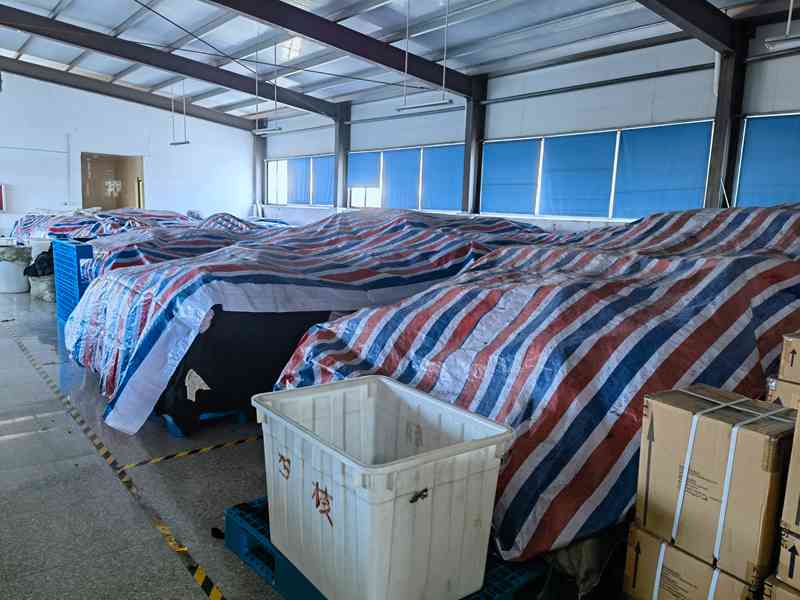
An apparel buyer should verify:
Storage conditions
- Fabric is protected from direct sunlight, moisture and contamination.
- The warehouse is clean and materials are identified.
- Temperature or humidity requirements are defined where material performance makes them relevant.
- Knit and stretch fabrics are relaxed for the required period and stored without distortion.
Incoming inspection
- A fabric inspection procedure is available.
- Quality and color standards are present during inspection.
- Roll identification is retained.
- Shade continuity is controlled by roll or lot.
- Defects are recorded and non-conforming material is separated.
Shrinkage and pattern decisions
Shrinkage should not be treated as a laboratory number that remains in a report. The result must influence pattern dimensions, marker planning and finished-garment tolerances where relevant.
A factory without an in-house laboratory is not automatically unsuitable. It may use qualified external laboratories or buyer-nominated testing. The important question is whether there is a defined testing plan, a responsible person, traceable reports and a rule preventing unapproved material from moving into bulk production.
4. Check Trims as Carefully as Main Fabric
Zippers, rib, thread, buttons, elastic, labels and heat transfers can create color, performance and compliance failures even when the garment fabric is correct.
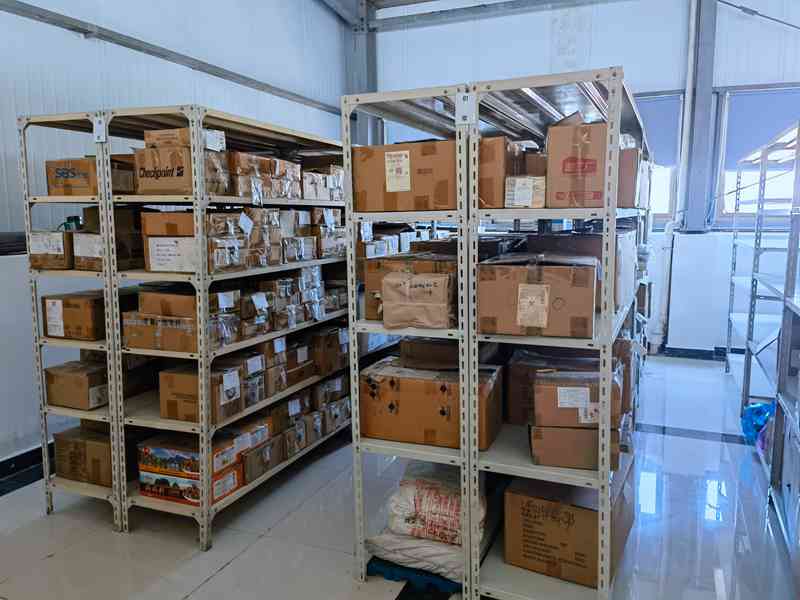
The trims warehouse should maintain:
- inbound and outbound stock records;
- inspection status and rejected-item segregation;
- approved trim cards or product component cards for current styles;
- color matching between fabric, rib, zipper, fastener and button;
- appropriate storage for heat-sensitive transfers and adhesives;
- traceability to the relevant style and colorway.
For private-label orders, this is also where the buyer should check woven labels, care labels, size labels, hangtags, barcodes and packaging components against approved artwork. A correct garment with the wrong label or barcode can still become an unusable shipment.
5. Cutting Control Determines Whether Approved Fit Can Be Repeated
Many fit and shade problems begin before the first seam is sewn. A cutting-room audit should follow the material from relaxation and spreading through numbering, bundling and replacement of defective panels.
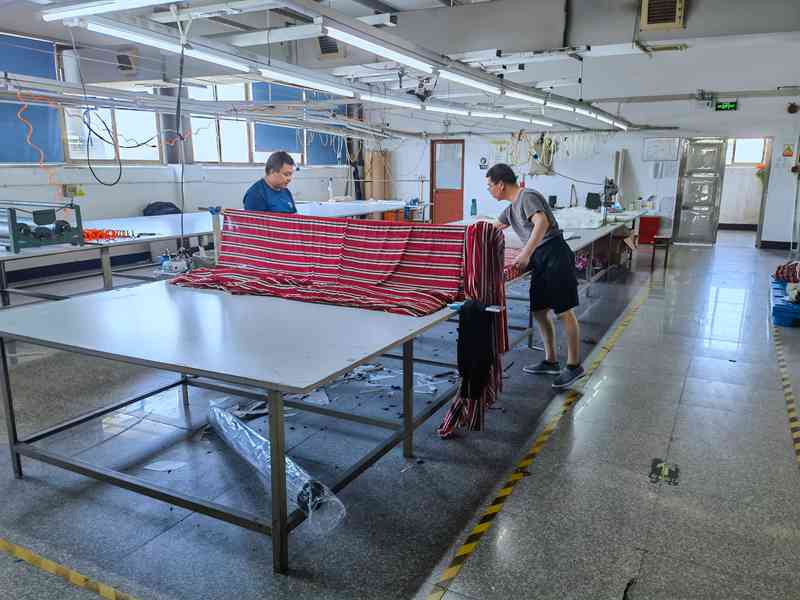
Key checks include:
- a clean, organized cutting area;
- controlled spreading height appropriate to the material;
- accurate cutting against the approved pattern;
- top, middle and bottom ply checks;
- records for markers and material consumption;
- a replacement-panel system using material from the correct roll;
- panel or bundle numbering to prevent shade mixing;
- correct fusing material, position, time, temperature and pressure.
Panel numbering deserves special attention. When panels from different rolls or shade groups are mixed, the difference may become visible only after sewing or washing. A buyer should not accept “the colors look close” as the control method. The factory needs a practical identification system that survives cutting, bundling and issue to the sewing line.
6. Treat Printing, Embroidery and Heat Transfer as Controlled Processes
Decoration should be audited only when it is within the proposed production scope. If printing, embroidery or heat transfer is subcontracted, the audit should identify the subcontractor and define how approvals, incoming checks and traceability are managed.
For applicable processes, verify that:
- approved artwork and placement measurements are available;
- print or embroidery is compared with an approved standard before sewing;
- color, density, registration and appearance are checked;
- heat-transfer settings follow material-specific requirements;
- temperature and pressure are monitored;
- decorated panels are protected and identified;
- failed pieces are segregated and replacement quantities recorded.
An audit score should not penalize a facility for a process that is genuinely not applicable. It should, however, explain how the process will be controlled if the buyer's order requires it.
7. Inspect the Sewing Line for Information Flow, Not Only Workmanship
The sewing floor is where buyer requirements must become repeatable instructions. A good sample does not prove that every line operator has the same information.
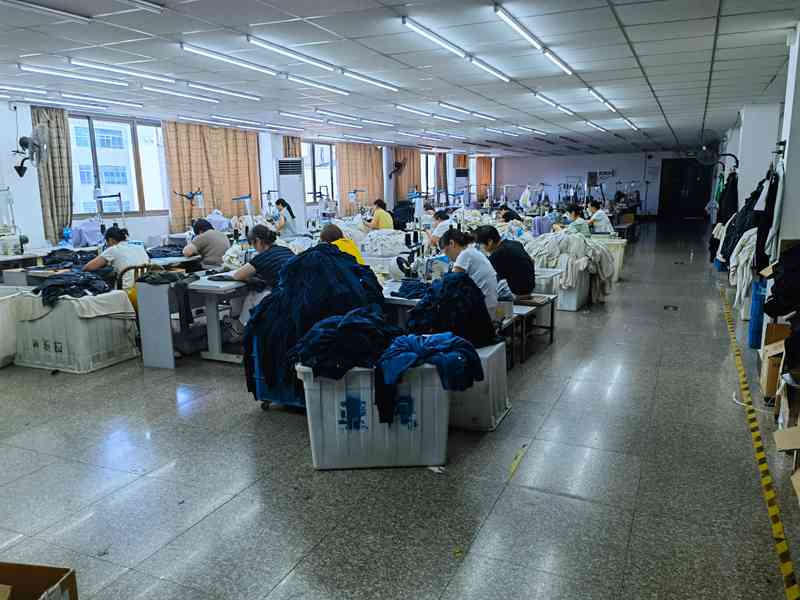
During the audit, check whether each active line has access to:
- the approved pre-production sample or equivalent quality standard;
- the current tech pack and measurement specification;
- a trim or component card;
- operation and construction instructions;
- approved color, print and wash references;
- known critical measurements and quality points.
The line should also demonstrate:
- a production plan;
- technical supervision capable of interpreting specifications;
- in-line quality checks;
- correct seam tension and seam balance;
- control of skipped stitches, raw edges, seam cracking and run-offs;
- a broken-needle and sharp-object procedure;
- mechanics available during production;
- end-of-line inspection;
- measurement checks before goods move to finishing.
The purpose is not to demand paperwork beside every machine. It is to confirm that operators, supervisors and inspectors are working from the same approved version. Uncontrolled revisions are a frequent cause of a sample being correct while bulk production follows an older instruction.
8. Verify Pressing, Packing and Rejected-Garment Segregation
Pressing and packing can damage an otherwise acceptable garment. Temperature, pressure, folding and carton quantities should be linked to product requirements rather than habit.
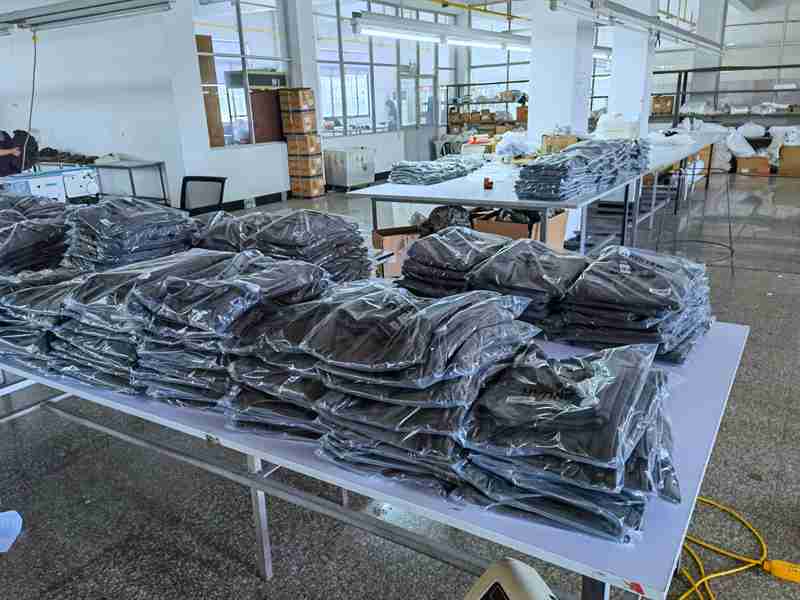
Check that the factory has:
- a clean pressing and packing area;
- a packing plan and shipment schedule;
- visual standards for labeling and packing;
- carton quantity and assortment checks;
- approved folding, bag and sticker requirements;
- a defined method for isolating rejected garments;
- final carton identification by style, size or other required reference.
Rejected-garment segregation is especially important. A factory should be able to show how failed goods are marked, separated, recorded and prevented from returning to approved stock without re-inspection.
9. Evaluate the Final Inspection Area and Evidence
A final inspection is not credible if inspectors lack light, space, approved standards or recorded results.
The inspection area should provide:
- sufficient lighting and working space;
- a suitable inspection table;
- the approved sample and current specifications;
- color, wash, trim and packing standards;
- an inspection procedure aligned with buyer requirements;
- records of defects, measurements and inspection decisions;
- evidence that results are reviewed and recurring problems are analyzed.
The factory should normally conduct its own pre-final review before the buyer or third-party inspector arrives. This does not replace independent inspection. It demonstrates that the factory accepts responsibility for evaluating its own output instead of relying on the buyer's inspector to discover basic production defects.
10. Do Not Stop at the Finished-Garment Warehouse
After inspection, approved garments still need protection and traceability.
The finished-garment warehouse should be clean and dry. Packed garments should be protected from direct sunlight, contamination and environmental damage. Cartons should be identified with the information required to match them to the order, assortment and shipping documents.

Buyers should trace at least one carton backward:
- from carton marking to packing list;
- from packing list to finished inspection;
- from finished inspection to style and production records;
- from production records to approved materials and specifications.
This simple exercise tests whether traceability works in practice rather than only in a written procedure.
11. How to Read an Audit Score Without Being Misled
An audit percentage is a summary, not a sourcing decision.
In the anonymized evaluation behind this guide, 56 of 58 applicable controls were marked compliant, producing a score of 96.6% under the worksheet's internal scoring method. The two failed checks were:
- no in-house laboratory at the evaluated facility;
- panel numbering was not used in the cutting process to control shade mixing.
This is a useful example because neither finding should be handled by ignoring the factory or by accepting the total score without conditions.
No in-house laboratory
The buyer should confirm which tests are required, where they will be conducted, who approves the results and whether bulk materials can proceed before reports are available. An external laboratory may be entirely appropriate if responsibilities and hold points are clear.
No panel numbering
The buyer should require a corrective method before using the factory for shade-sensitive fabrics, washed garments or products assembled from multiple rolls. Evidence might include a revised procedure, numbered bundles, training records and verification during the first production run.
This leads to an important principle: a high score does not cancel a product-specific risk. One failed control may matter more to the proposed order than several compliant administrative controls.
12. Convert Findings into a Corrective Action Plan
Each failed or unclear item should become a controlled action, not a note that disappears after the visit.
A corrective action record should state:
- the audit requirement;
- the observed evidence or gap;
- the immediate containment action;
- the root cause, where relevant;
- the corrective action;
- the responsible person;
- the planned completion date;
- the evidence required for closure;
- who verifies that the action is effective.
Some findings can be closed with documents and photos. Others require an on-site follow-up or verification during a real production order. For example, a new panel-numbering procedure is not proven merely because the factory writes it down. The buyer should see it applied to bundles on the cutting floor.
13. Factory Audit, Product Development and Order Control Are Different Tasks
A factory audit evaluates whether a facility has suitable systems and controls. It does not approve a specific fabric, fit, color, print, label or shipment.
A complete apparel sourcing process still needs:
- supplier matching for the specific category;
- sample development and fit approval;
- material and trim confirmation;
- a controlled pre-production approval;
- production follow-up;
- in-line or pre-final quality checks where needed;
- final inspection against the order requirements;
- packing and export-document verification.
TRANSION can support these activities through its in-house sample room, small-scale production facility and long-term manufacturing partners, depending on the project requirements. Partner factories should be described as partner facilities, not as facilities owned by TRANSION. The objective is to connect supplier evaluation with product-specific development and order control through one accountable project team.
Buyers comparing production routes can review our guide to OEM and ODM clothing manufacturing, learn about apparel sourcing coordination in China, or examine TRANSION's broader apparel manufacturing support.
Clothing Factory Audit Checklist for Buyers
Before approving a supplier, confirm that you can answer “yes” to the following:
- Is the audit scope matched to the intended product?
- Are quality responsibilities and current procedures documented?
- Can the factory show recent records, not only blank templates?
- Are fabric and trims inspected, identified and segregated by status?
- Are shade, shrinkage and panel-replacement risks controlled?
- Are approved specifications available where production occurs?
- Are critical measurements checked during production?
- Are rejected garments isolated from approved goods?
- Are final inspection results recorded and reviewed?
- Can cartons be traced back to order, inspection and production records?
- Are non-applicable processes clearly identified?
- Does every failed item have a responsible owner and closure evidence?
Frequently Asked Questions
Is a high factory audit score enough to approve a clothing supplier?
No. A high score indicates that many evaluated controls were present, but the buyer must still review any failed item against the specific product risk. Sampling, material approval, product testing and shipment inspection remain separate decisions.
Does a clothing factory need an in-house testing laboratory?
Not in every case. The appropriate arrangement depends on the product and required tests. A factory may coordinate testing through a qualified external laboratory, but responsibilities, sample identification, report approval and production hold points should be documented.
What is the most important area in a garment factory audit?
There is no single universal area. For a washed or shade-sensitive garment, fabric control and panel identification may be critical. For an embellished product, artwork approval and attachment security may carry more risk. The audit should prioritize the intended product.
Should buyers audit subcontracted printing or embroidery?
If the process is important to product quality, the buyer should understand where it is performed and how the main supplier controls approvals, identification, inspection and corrective action. A subcontracted process should not become an unrecorded gap in the supply chain.
What evidence should a buyer request during a factory audit?
Useful evidence includes recent inspection records, approved material standards, trim cards, current tech packs, calibration labels, maintenance records, defect segregation, corrective actions, traceability records and examples of completed production documentation.
How often should an apparel factory be re-evaluated?
The frequency should depend on risk, order activity, product complexity, performance history, major facility changes and buyer requirements. A new product category or repeated quality problem may justify a targeted review even when the general audit remains current.
Can a sourcing company conduct factory evaluations for a buyer?
Yes, depending on the agreed scope. The buyer should understand whether the evaluation is an internal supplier assessment, a second-party audit or an independent third-party audit. The report should state the criteria, evidence, findings and limitations clearly.
Plan the Evaluation Around Your Product
Need to evaluate a factory or coordinate an apparel order in China? Send TRANSION your product category, technical files, target quantity, material direction, quality requirements and destination market. We can review the project requirements and discuss an appropriate supplier-evaluation, sampling and production-control approach.
Discuss Your Apparel Sourcing Requirements


Leave A Comment