
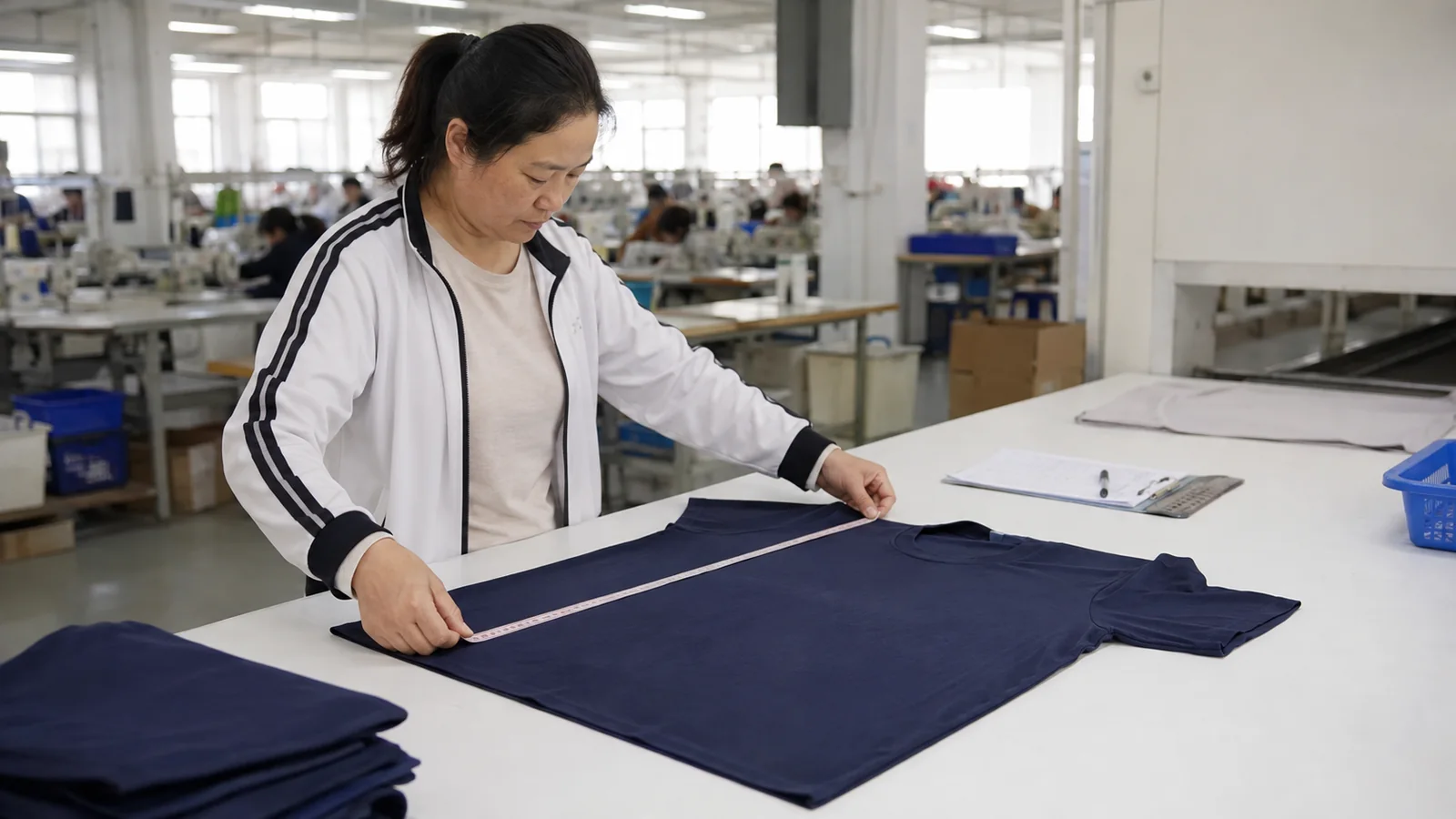
Garment AQL inspection is a statistical method for deciding whether to accept or reject a production lot after checking a defined random sample. It does not mean that “AQL 2.5 allows exactly 2.5% defective garments.” A useful inspection plan must also define the lot, sampling standard and edition, inspection level, defect categories, acceptance and rejection numbers, product specifications, and the action required if the lot fails.
The current international edition is ISO 2859-1:2026, published in January 2026. It replaces the 1999 edition and provides AQL-indexed schemes for lot-by-lot inspection by attributes. Buyers should identify the agreed standard and edition in their purchase documents instead of writing only “AQL inspection required.”
What Does AQL Mean in Garment Inspection?
AQL stands for Acceptance Quality Limit. In practical apparel sourcing, it is one input used with a sampling plan to determine:
- how many units are selected from a defined lot;
- how defects are counted and classified; and
- the acceptance and rejection thresholds for each defect category.
The purpose is a lot-disposition decision, not an exact calculation of the lot’s true defect percentage. The NIST acceptance-sampling guidance makes this distinction clear: acceptance sampling helps decide whether a lot is likely to be acceptable; it is not designed to estimate the quality of every item in that lot.
Sampling also involves risk. A conforming lot can be rejected, and a poor lot can sometimes be accepted. These are commonly described as producer’s risk and consumer’s risk. That is why AQL inspection should operate alongside material approval, sample approval, production control, testing, and corrective action—not as a replacement for them.
Six Decisions Buyers Must Make Before Inspection
1. Name the Standard and Edition
State whether the order will use ISO 2859-1:2026 or another agreed system. Some U.S. buyers and inspection providers use ANSI/ASQ Z1.4-2003 (R2018), which ASQ identifies as its current edition. Do not assume that two parties using the word “AQL” are working from the same document, switching rules, or tables.
The licensed standard or an approved inspection provider should be used to determine the code letter, sample size, and acceptance/rejection numbers. Copying an unverified table from a blog or image search can produce the wrong decision.
2. Define the Inspection Lot
The lot is the quantity from which the sample will be selected. The inspection brief should say whether one lot covers:
- one purchase order or part of an order;
- one style or several styles;
- one color or mixed colors;
- one production site;
- one completed shipment window; and
- a specific carton range or total carton count.
Combining unrelated styles or production conditions can hide concentrated problems. Separating every SKU without a reason can make the plan inefficient. The grouping should reflect manufacturing risk and the buyer’s traceability needs.
3. Agree on the Inspection Level and AQL Values
The inspection level affects sample size. AQL values set the reference points used by the selected plan. There is no universal combination that suits every garment, price point, customer, or risk level.
The buyer, manufacturer, and inspector should confirm the settings in writing before production. If the buyer has a quality manual, purchase agreement, retailer protocol, or nominated inspection company, those instructions should control. Do not wait until the inspector arrives to decide which plan applies.
4. Create Product-Specific Defect Categories
Critical, major, and minor are useful labels only when the underlying definitions are specific enough to apply consistently.
| Defect class | Practical meaning | Apparel examples that may fit the class* |
|---|---|---|
| Critical | A potential safety, regulatory, or serious use risk | A sharp point, broken needle fragment, unsafe detachable component, or required warning omitted |
| Major | A defect likely to make the product unsaleable, unusable, or materially different from the approved requirement | Open seam, hole, broken zipper, wrong size label, severe shade variation, incorrect artwork, or a key measurement outside the agreed tolerance |
| Minor | A defect that departs from the standard but is unlikely to materially reduce normal use | Removable loose thread, small non-prominent appearance issue, or limited workmanship variation within the buyer’s stated rules |
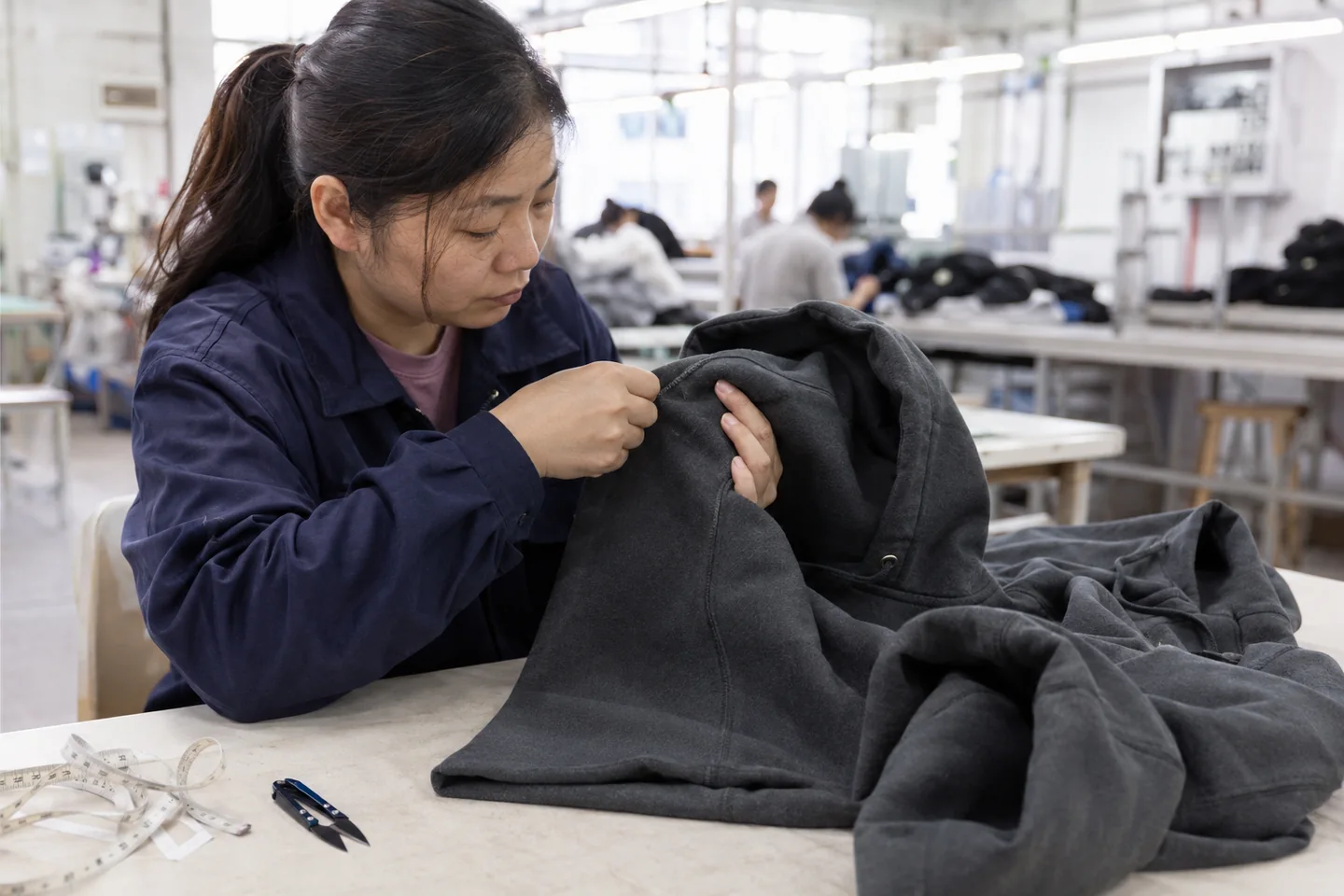
*These are examples, not universal classifications. The same issue can move between classes according to product type, location, severity, destination market, and intended user. Children’s clothing, protective items, drawcords, trims, and sharp-object controls may require stricter treatment. Intertek’s textile and apparel inspection overview also emphasizes that defect severity is connected to safety, usability, workmanship, labeling, and packaging.
5. Convert the Tech Pack into an Inspection Checklist
An inspector cannot judge “good quality” without controlled references. Before inspection, convert the current apparel tech pack and approved sample into a checklist that covers:
- style, color, size range, and order quantity;
- bill of materials and approved fabric or trim references;
- points of measurement, tolerances, and measurement method;
- construction, seam, stitch, and workmanship requirements;
- print, embroidery, wash, color, and placement standards;
- labels, hangtags, barcodes, polybags, carton marks, and assortment;
- on-site tests that the inspector is expected to perform;
- photo requirements and report format; and
- the exact pass/fail rule for each check.
The approved pre-production sample, color standard, trim card, packaging sample, and latest revision should be available at the inspection site. An old specification can make a technically careful inspection commercially useless.
6. Define What Happens After a Failed Inspection
A rejection result should trigger an agreed process, not an improvised argument. The purchase terms should clarify:
- who reviews the findings;
- whether the factory must sort or rework the affected quantity;
- how corrected and rejected units are separated;
- whether a new random inspection or another verification is required;
- who authorizes any written deviation; and
- who gives final shipment release.
Do not change the result by asking the inspector to ignore defects after the count is known. If the buyer accepts a deviation, record exactly what was accepted, for which quantity, and by which authorized person.
Which Inspection Stage Should You Use?
A final random inspection is valuable, but it is late in the process. A risk-based plan may use more than one checkpoint.
Pre-Production or Initial Production Check
Use an early check to verify that bulk fabric, trims, colors, labels, patterns, and current instructions match the approvals. This is particularly helpful when materials are custom-developed, a supplier is new, or a style contains unfamiliar construction.
During-Production or Inline Inspection
Inspecting while production is active can reveal recurring workmanship, measurement, shade, or assembly problems before the entire order is completed. The team can then contain affected work, investigate the cause, and verify corrections while production remains accessible.
Pre-Shipment Inspection
The finished-goods inspection should occur when enough goods are completed and packed to represent the shipment. It typically checks quantity, workmanship, measurements, product details, labeling, assortment, packaging, and carton information against the approved brief.

Inspection providers may define their own minimum completion percentages for named services. Those operating thresholds should not be presented as ISO requirements. State the required stage and readiness conditions in the booking instructions.
For a wider view of checkpoints from sample development through final inspection, see TRANSION’s apparel sampling and quality control process.
What AQL Inspection Does Not Replace
It Does Not Replace 100% Control of Critical Risks
Random sampling cannot guarantee that every unit is free from a rare hazard. Product-specific safety controls—such as needle policies, metal detection where required, component security, and age-specific requirements—need appropriate process controls and verification.
It Does Not Replace Garment Measurement Planning
A visual sample plan and a measurement plan do not have to use the same sample size. Define which sizes and colors will be measured, which points of measurement are critical, and how tolerances are applied. Include the measurement method in the specification so two inspectors do not measure the same garment differently.
It Does Not Replace Material and Performance Testing
Appearance checks cannot establish fiber composition, restricted-substance compliance, colorfastness, dimensional stability, pilling, seam strength, flammability, or other laboratory properties. Select tests according to the product, claims, buyer protocol, and destination market.
It Does Not Prove Regulatory Compliance
The inspector can compare labels and goods with the buyer’s approved file, but the buyer still needs to define the legal requirements for the target market. For example, the U.S. Federal Trade Commission provides requirements and guidance concerning fiber content, country of origin, responsible-company identification, and care labeling. The European Union’s textile-label guidance covers fiber-composition labeling and language requirements. Product and market details determine what else may apply.
A Practical Garment Inspection Brief
Send the following information before the inspection is booked:
- supplier and production-site details;
- purchase order, style, color, size, and quantity breakdown;
- defined lot and carton range;
- sampling standard and edition;
- inspection level and agreed AQL values by defect class;
- product-specific critical, major, and minor defect list;
- current tech pack and revision date;
- approved samples, color standards, and trim references;
- measurement chart, method, and tolerances;
- packaging, barcode, label, and carton requirements;
- required on-site checks and separate laboratory reports;
- reporting recipients and communication deadline;
- failed-inspection, rework, reinspection, and release process.
This brief should be shared with both the production team and the inspector. A requirement that reaches only one side is difficult to enforce consistently.
Frequently Asked Questions
Does AQL 2.5 mean 2.5% defects are allowed?
No. AQL is an index used with a defined sampling scheme. The selected standard, lot size, inspection level, and AQL lead to a sample size and acceptance/rejection thresholds. The result is a decision about the lot, not proof that exactly 2.5% of all garments are defective.
What AQL should a clothing brand use?
There is no universal value for all apparel. The decision depends on product risk, customer requirements, defect severity, price point, intended user, and contractual quality policy. Buyers should define values by defect class with their quality team or qualified inspection provider.
Is General Inspection Level II mandatory for garments?
No universal rule makes one general inspection level mandatory for every garment order. It is a commonly encountered selection in commercial inspection, but the agreed level should come from the buyer’s quality policy, contract, and chosen standard.
Can critical, major, and minor defects use different AQL values?
Yes, defect classes are commonly evaluated separately under an agreed plan. However, the classification definitions and values must be written before inspection. Critical safety or regulatory concerns may also need controls beyond ordinary random sampling.
What is the difference between an AQL inspection and a factory audit?
An AQL inspection evaluates a defined product lot against agreed specifications using a sample. A clothing factory audit examines the facility’s systems, capabilities, records, and process controls. A strong audit does not approve a shipment, and one passing shipment does not prove the factory’s complete management system.
Who should approve shipment after inspection?
The purchase agreement should identify the authorized buyer representative. The inspector reports evidence and applies the agreed decision rules; the commercial release decision remains with the party named in the order terms. A failed result should not be converted into a pass without documented corrective action or an authorized written deviation.
Plan Inspection Before You Place the Order
Quality requirements are easiest to manage before price, production time, and shipment dates are fixed. If you are preparing an OEM or ODM apparel program, include your target market, tech pack, quantities, inspection standard, testing needs, and preferred third-party inspector in the first project brief.
TRANSION can coordinate product development, sampling, material sourcing, production follow-up, packaging, and buyer-appointed or agreed third-party inspection requirements according to the project. Review our OEM and ODM clothing manufacturing services or send your project requirements for a project-specific review.

