
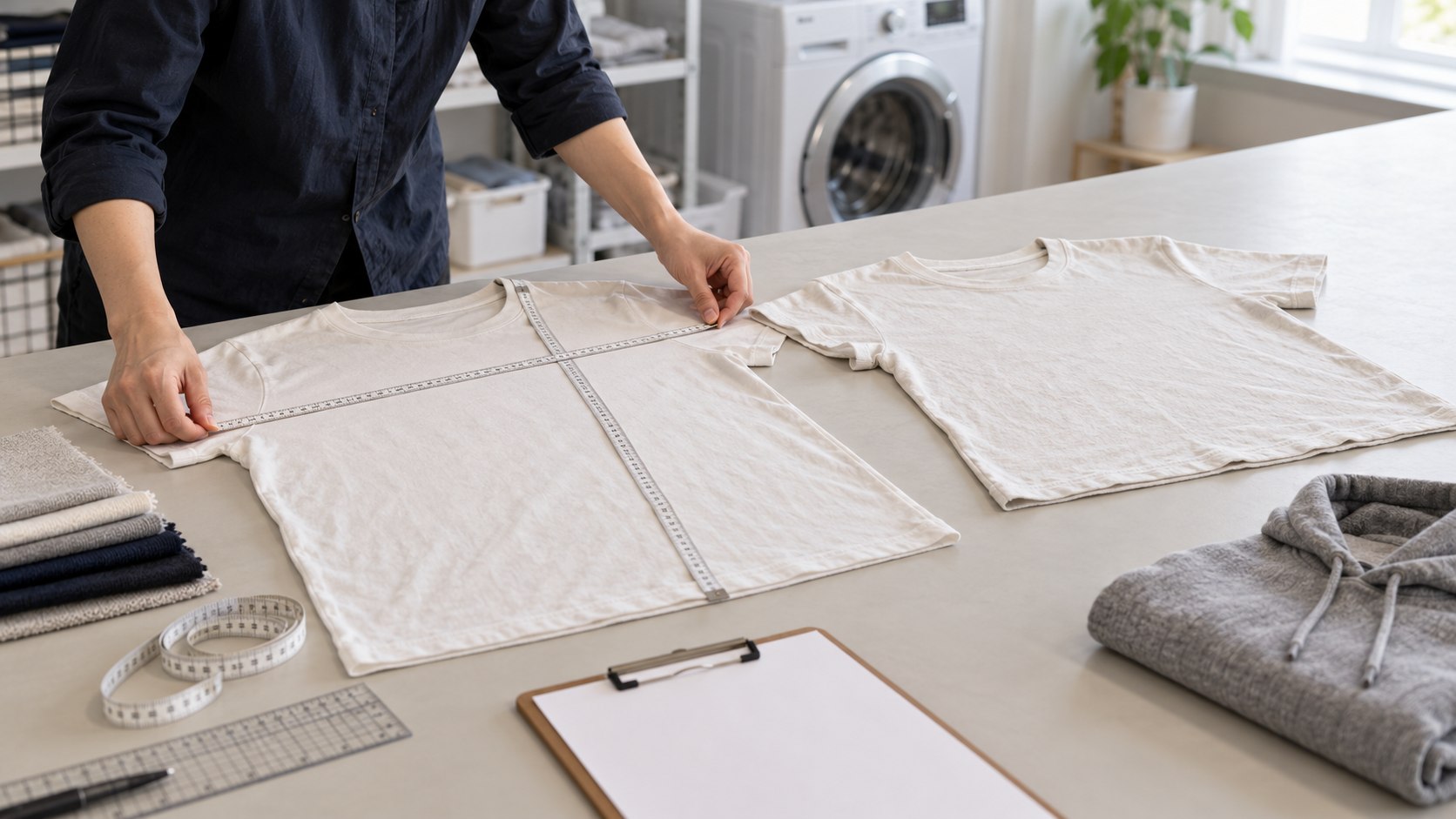
Garment shrinkage testing checks how a fabric or finished garment changes after an agreed washing and drying process. For buyers, the useful result is not simply “pre-shrunk.” It is a repeatable report tied to the actual material, care method, sample and measurement points used for the order.
1. Test the intended construction
Confirm fibre content, knit or weave, GSM, finish and colour before testing. A result from one jersey, fleece or dye lot should not automatically approve another.
2. Write the full wash and dry procedure
Temperature, cycle, detergent, machine type, drying method and number of cycles can change the outcome. ISO 6330:2021 specifies domestic washing and drying procedures for textile testing and notes that different parameters can affect results.
3. Mark consistent measurement points
Measure the same points before and after treatment, with the garment flat and relaxed under the agreed conditions. Record lengthwise and widthwise change separately. ISO 5077:2007 covers determining dimensional change after specified washing and drying procedures.
4. Check more than overall size
Review body length, chest width, sleeve length, neckline, cuffs and hem as relevant. Also inspect twisting, seam puckering, rib recovery and panel distortion: a garment can retain acceptable overall dimensions yet still lose its intended shape.
5. Test the finished sample
Fabric data is useful, but sewing, pressing, garment dyeing, washing and trims can change finished performance. Include the wash-tested garment in the sample approval and quality-control process.
6. Agree tolerances before bulk cutting
There is no single percentage suitable for every product. Set buyer-approved limits by measurement point, fabric, finish and intended care method. Keep shrinkage tolerance separate from normal finished-garment measurement tolerance.
7. Recheck production material
Freeze the approved test method and sample, then verify representative bulk fabric or garments when lots, colours or finishing conditions change. Compare like with like before releasing production.
Planning a knitwear order? Review the custom T-shirt manufacturing and custom hoodie manufacturing pages, then request a quotation with your material, care method, measurement points and acceptance criteria.


Leave A Comment