
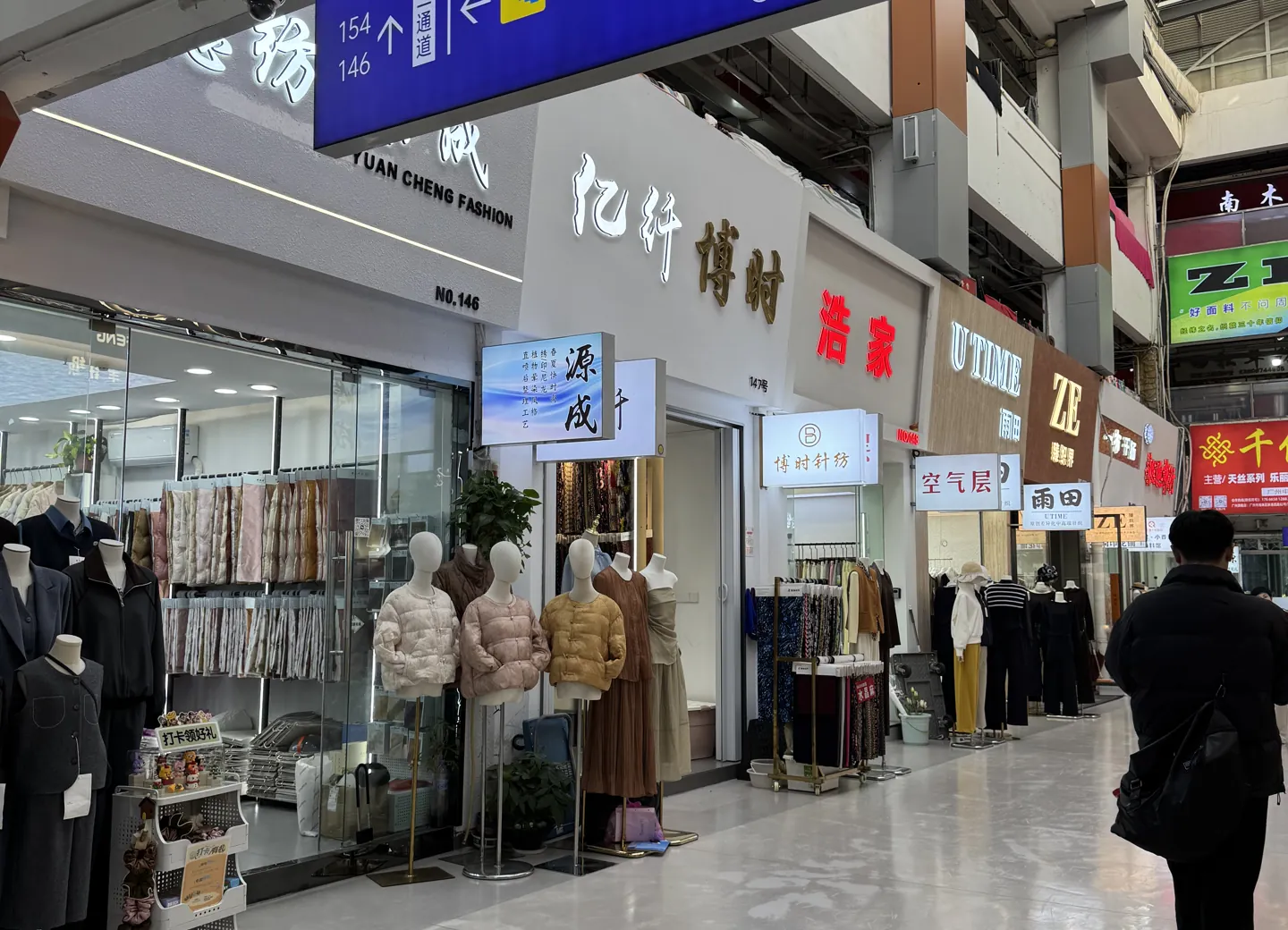
At China Textile City in Keqiao, some shops show what fabric can become: a grey zip jacket, a soft-shouldered coat or a skirt that falls close to the body. Others hang rows of swatch cards beside full-width fabric samples. For apparel buyers, it pays to use both displays. The garment helps you describe the look you want. The swatch gives you a specific fabric to sample, test and quote.
Where to start: Look at garment displays in East Market for womenswear ideas, then compare swatches and larger fabric hangers in North Market for materials such as brushed cloth and checks. Before sampling, record the supplier’s article number, exact fiber composition, weight, usable width and color code. Ask what can be supplied for both the prototype and the bulk order.
Where is the Keqiao fabric market?
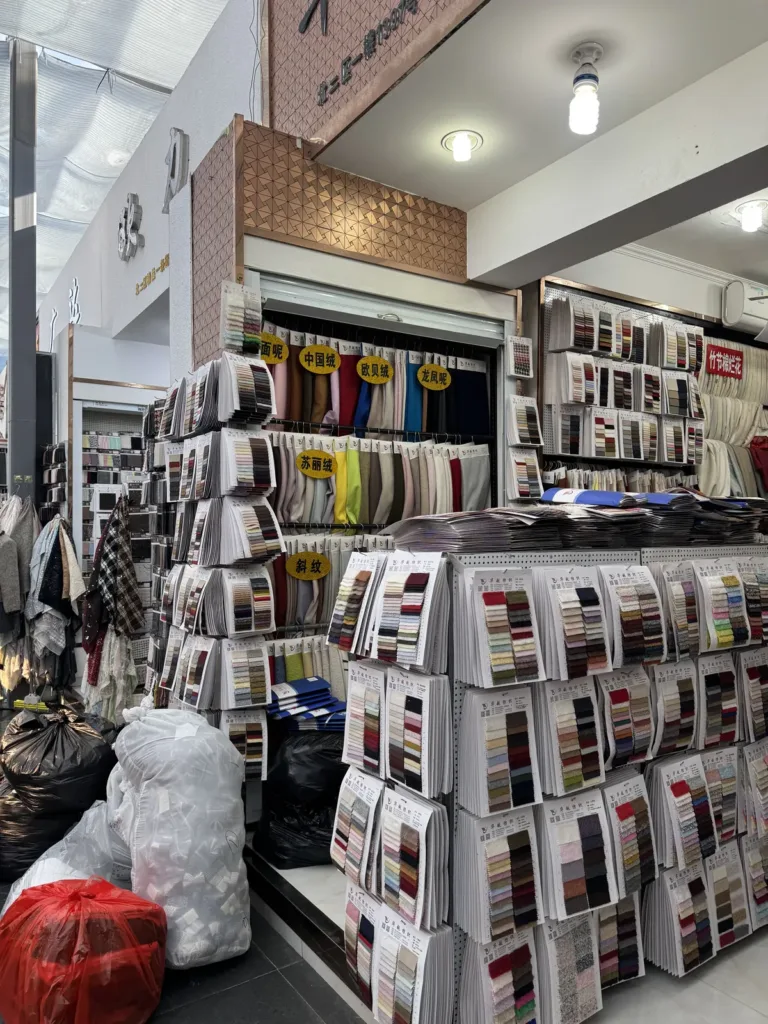
China Textile City is a group of textile markets in Keqiao District, Shaoxing, Zhejiang, China. The market directory describes East Market as a womenswear fabric destination and lists garment fabrics and trims on the first floor of North Market. These photos show East Market aisles and fabric displays marked North District 2 (北二区). Save the full market name, section, floor and shop number so you can find the right stand again.
Start with how the garment should hang
Look at the silhouettes before opening the swatch books. A draped top needs fabric that falls in soft folds. A short zip jacket may need more body to hold its collar and front opening. Two fabrics can look nearly identical on a card and behave differently once cut into panels and sewn.
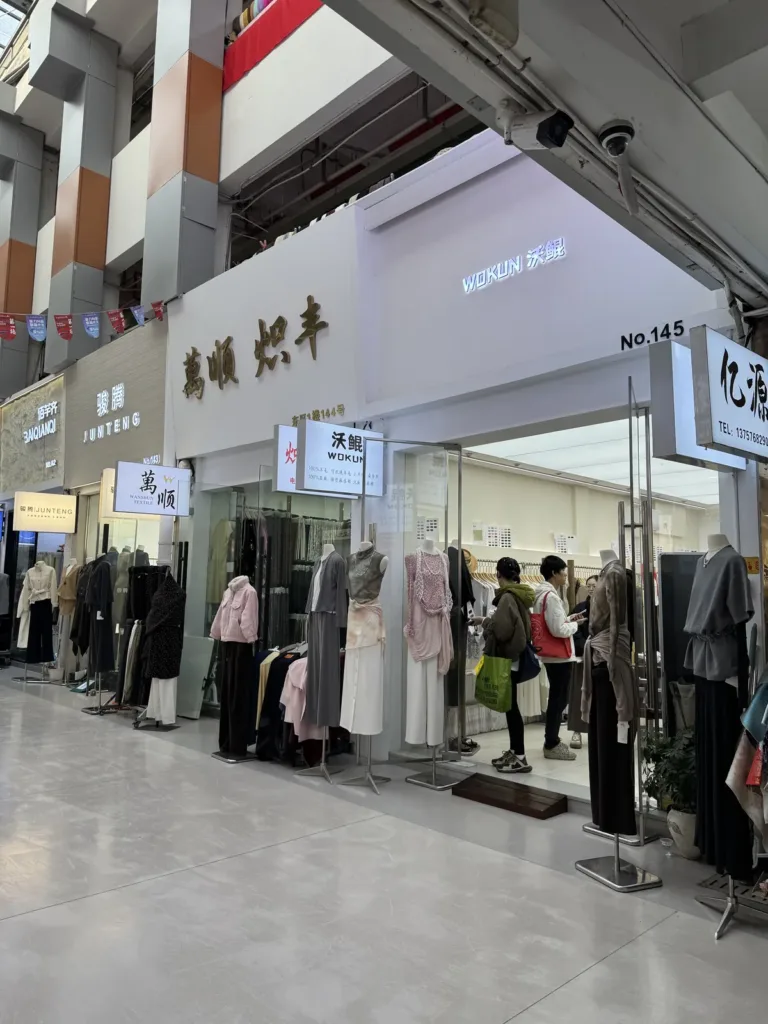
Use the shops’ sample garments to decide which qualities belong in your brief. For a grey jacket, for example, write down whether the shape should be structured or relaxed, how plush the surface should feel, and how much room the design allows around a zipper or pocket seam. Then use a reference swatch or garment to communicate those details to your supplier.
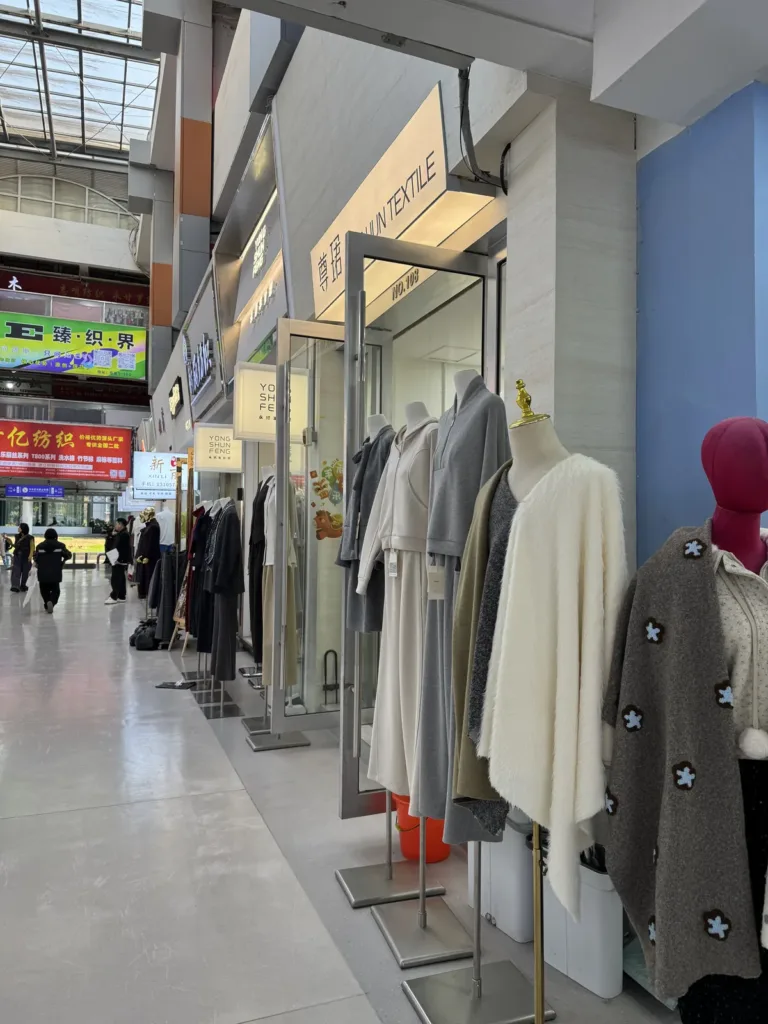
Compare color cards and larger fabric cuts
The North Market displays show why a small color chip and a larger hanger are useful together. Use the card to shortlist colors and capture the article number. On the larger piece, check whether the nap changes shade when brushed in the opposite direction, whether a pale fabric is see-through, and how a check looks across a panel. A check that needs to line up across pockets or the front opening can also change cutting yield.
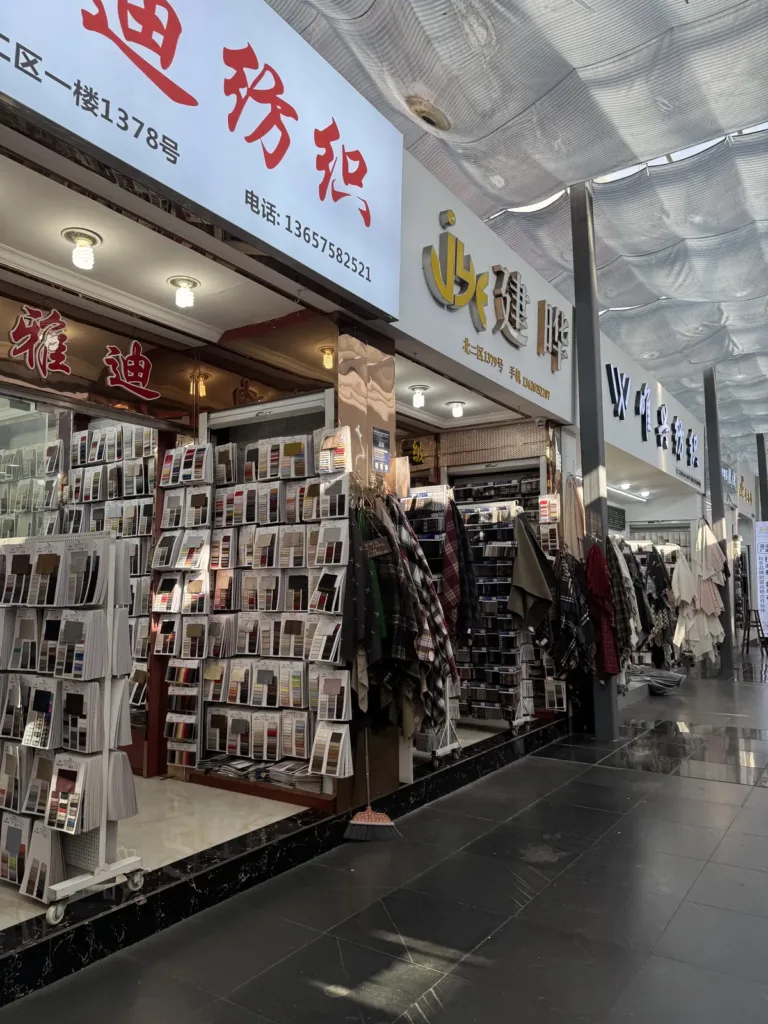
Names on shop signs, such as “twill” (斜纹) or a trade name ending in 绒, describe a construction, finish or product line. Ask for the exact fiber percentages and weight in grams per square meter (GSM). A wool-like surface can come from several different fiber blends. If a near match is offered, get its own article number and compare it under the same light before using it as a substitute.
What to record before buying sample yardage
- Fabric identity: Supplier and shop location, article number, color code, fiber percentages, construction and finish. Keep a labeled physical swatch with the record.
- Cutting data: Weight in GSM, usable cutting width, and any nap direction or pattern repeat. Ask the factory to check fabric consumption before comparing quotes.
- Availability: Sample yardage, current stock by color, bulk minimum order quantity (MOQ), and lead time. Ask separately what happens if you reorder the same shade.
- Price and approval: Confirm whether the quote is per meter or per kilogram. Agree on the shade reference, required tests and acceptable tolerances before placing the bulk order.
For a brushed coat fabric, discuss pilling, shedding and seam bulk. For a fitted knit, check stretch and recovery. For washable garments, agree on the care method and check shrinkage and colorfastness against it. Plan these checks around the intended garment. Our guide to choosing fabric for custom apparel covers how end use affects the specification.
Carry the fabric approval into production
Make a prototype in the intended fabric where possible. Review fit, drape, seam appearance and how the fabric works with lining, interfacing and trims. Keep the approved garment and fabric swatch together. Before bulk cutting, have the factory compare the production lot with that approval and flag any shade, width or finish differences. See how that check fits into garment production from fabric storage to packing.
Frequently asked questions
Can I order small quantities of fabric in Keqiao?
Ask each supplier whether the exact article and color are in stock and can be cut in a small quantity. A shop may sell sample yardage and still require a larger minimum for a custom dye lot or replenishment.
What is the difference between a market swatch and a bulk approval?
A market swatch identifies a candidate fabric. A bulk approval records the agreed fabric, shade reference, tolerances and test requirements. Check the production lot against that approval before cutting.
What should I send if I’m sourcing remotely?
Send the garment type, a tech pack or reference garment, the target composition and GSM, color references, estimated order size and intended care instructions. If you have already visited the market, add photos of the labeled swatch and its article number.
If you are developing a collection, share your fabric shortlist and garment brief with Transion’s apparel sourcing team. Include any swatches already approved when you request a sampling or production quote.


Leave A Comment