
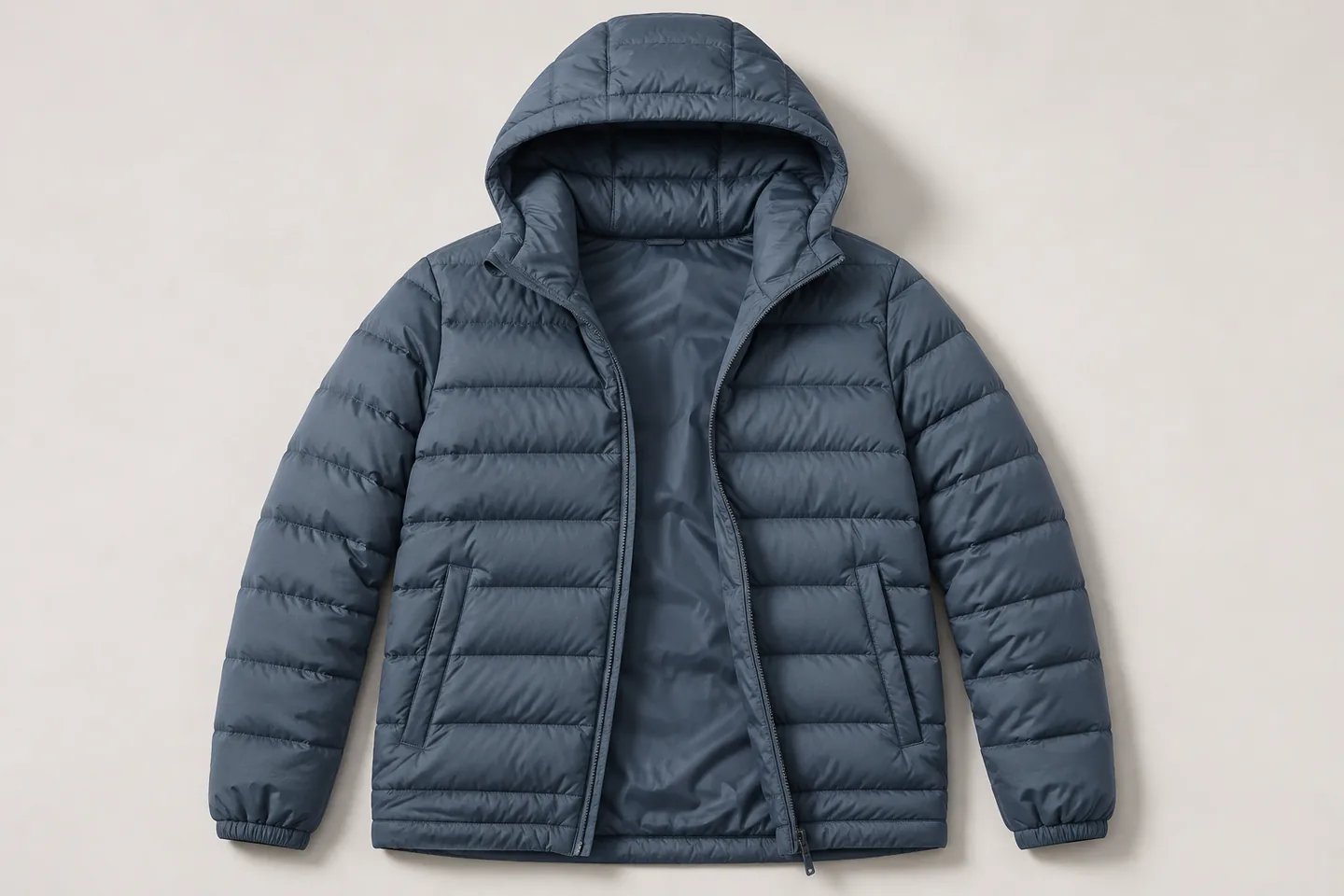
Featured image is an AI-generated illustration.
Ask each supplier to quote the same insulation construction and show how much fill goes into each part of the jacket. For loose down, record the fill specification, net fill weight and distribution across the garment. For sheet insulation, record the supplier’s grade, weight per square meter and the layers used in each zone. Use a sewn sample to check loft, bulk and fill containment.
Put the insulation details on the same page as the sketch
- Loose down. Record the specified composition, fill-power target and reporting units. Ask how the material was conditioned for testing, then record the net fill weight for the base size and how the target changes across the size range. Fill power measures loft for a defined amount of down under a specified test. Net fill weight measures how much filling is in the garment. IDFL’s definitions of fill power and net fill weight.
- Synthetic sheet insulation. Specify the supplier article number, fiber composition and weight in grams per square meter. List any additional layers and mark their coverage. Confirm whether the supplier can deliver the same article and construction for bulk.
- Loose synthetic fill. Request the actual fill identity and mass by garment zone. If you require a fill migration or thermal test, agree on the sample construction and method with the lab. IDFL’s synthetic fill testing options.
Make a fill map the sample room can follow
Mark the front, back, sleeves, collar and hood, then state what goes into each area. For loose fill, ask the sample room to record the quantities used so you can compare them with the panel targets. For sheet insulation, mark seams where the layer ends or overlaps. A jacket can reach the total target fill weight with uneven distribution, so review the locations that matter most for the design. IDFL’s jacket testing guidance on panel weights and downproofness.
Compare quotes on the same size, fill map, shell, lining and quilting layout. Ask which material minimums apply and whether a change in fill grade affects sampling, purchase timing or sewing. Request separate dates for material availability and pre-production sample approval so you can see which decision affects the schedule.
Add the fill map to your development file. Transion’s clothing tech pack guide.
Check the finished sample before releasing the order
- Compare both sleeves and front panels after the samples have been unpacked and allowed to recover under the same conditions.
- Try the jacket on over the intended base layer. Check movement at the shoulder and elbow, closing at the front, and how the collar and hood sit when worn.
- Inspect stitch lines, pockets and baffle edges for visible fill migration or leakage. If the jacket has a care or performance claim, agree on testing of the relevant finished construction before making the claim.
- Keep the approved garment, fill map and material report together. Give the inspection team the agreed checks and the exact sample revision.
Record approval alongside the fit and workmanship decisions. Transion’s garment sample approval checklist.
Frequently asked questions
Can I compare two jackets by fill power alone?
Start by matching the test method, then compare net fill weight, panel distribution and construction. Treat any warmth rating as a separate claim that needs its own evidence.
Can a factory switch to a different fill with the same listed weight?
Assess the proposed substitution in a sewn sample. Confirm loft, fit, care and any required performance results before approving the change.
Send your jacket sketch, size range, expected quantity and desired loft or feel. Include any materials or tests you have already approved. Request a puffer jacket sampling or production quote from Transion.


Leave A Comment